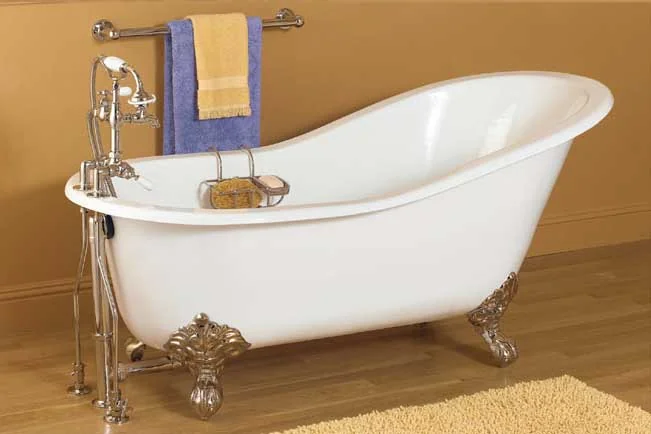
The classic argument for keeping an old cast iron clawfoot is that they’re built to last forever and don’t make them like that anymore. That’s true. But it’s not the whole picture.
Modern acrylic clawfoot tubs have gotten genuinely good. And in many situations — especially for buyers who aren’t driven by nostalgia — new acrylic is the smarter practical choice.
Here’s the honest comparison.
Why Acrylic Has Won Over a Lot of People
Weight. A standard 5-foot cast iron clawfoot tub weighs 250–350 lbs empty. Add water and a person and you’re asking a lot of your floor structure. Most floors in older homes handle it, but it’s a real consideration — especially if you’re doing a second-floor bathroom.
A comparable acrylic clawfoot tub weighs 70–100 lbs. That’s a one or two-person move rather than a four-person ordeal.
Installation. Lighter weight means you can DIY the install, or at minimum you’re not paying for a three-man crew. One or two people can carry an acrylic tub into place, set it on the legs, and connect the plumbing. Moving a cast iron tub requires planning.
Cost. A decent used cast iron clawfoot tub in need of restoration runs $500–$1,500 at salvage dealers and on Craigslist, before any restoration work. Professional refinishing adds $400–$700. New feet may add another $200–$400. You can spend $1,500–$2,500 restoring an old cast iron tub.
A new acrylic clawfoot tub that includes drain, overflow, and legs ships free from Amazon for $600–$1,200. You can be soaking the same day you install it.
Warranty. A new acrylic tub comes with a manufacturer’s warranty — typically 1–5 years. Your restored cast iron clawfoot comes with the previous owner’s confidence.
Modern features. New acrylic clawfoots often include built-in overflow and drain hardware, pre-drilled faucet holes in the right position for freestanding or deck-mount faucets, and sometimes slip-resistant surfaces inside the basin.
What to Look For When Buying
Not all acrylic clawfoot tubs are created equal. Here’s what matters:
Acrylic thickness. Look for a minimum of 8mm acrylic reinforced with fiberglass backing. Thin acrylic (under 6mm) flexes when you sit in it — the “creaking” and “giving” that some cheaper tubs produce. Thicker acrylic with proper reinforcement feels much more solid.
Legs included. Most reputable listings include legs. Confirm the leg finish matches your other fixtures. Adjustable legs (leveling feet) are a significant advantage on imperfect floors.
Drain and overflow included. Most complete kits include the drain and overflow in matching finish. If they’re not included, budget an extra $80–$150 for quality drain hardware.
Freestanding drain compatibility. Freestanding clawfoot tubs typically use a specific freestanding drain and filler (faucet) assembly. Confirm the tub has the correct pre-drilled holes for the filler style you want.
Basin depth and length. The interior basin size matters more than the exterior dimensions. A 59” tub may have an interior soaking length of only 45”. If you’re tall, verify the interior dimensions.
Check those interior numbers against the spec sheet before you commit to any acrylic clawfoot tub — exterior length is the number sellers advertise, and it is not the one you bathe in.
When Old Cast Iron Is Still Worth It
Cast iron has real advantages that acrylic doesn’t match:
Heat retention. Cast iron holds heat dramatically better than acrylic. If long, hot soaks matter to you, cast iron stays warm longer. Acrylic is a decent insulator but not cast iron.
Feel and weight. There’s something about sitting in a heavy cast iron tub that feels different — more substantial. Some people care about this.
Sentimental or historical value. If it’s your grandmother’s tub, or a documented antique piece, that value is real even if it’s not financial.
Ornate feet. Some original clawfoot feet are genuinely beautiful and specific to an era. A Victorian ball-and-claw foot from 1895 doesn’t look the same as a reproduction.
If any of these factors matter to you, restore the old one. The process works — a properly refinished cast iron clawfoot looks stunning.
If you’re making a purely practical decision with none of that emotional component, new acrylic is often the better investment.
What the Installation Actually Involves
The weight difference is the reason most people are looking at acrylic in the first place, and it changes the job in ways worth knowing before you buy.
Floor loading. A cast iron clawfoot runs 250–350 pounds empty and holds another 300 or so of water, plus the person in it — call it 700 pounds concentrated on four feet. That is a real structural question in an old house with an upstairs bathroom, and it is the reason some second-floor clawfoots sit on a reinforced section of floor. An acrylic tub of the same size lands nearer 70–100 pounds empty, so the loaded weight is dominated by the water and spread over the same four feet. For most framing that is an ordinary load rather than a conversation with a carpenter.
Getting it up the stairs. Two people carry an acrylic clawfoot without much drama. Cast iron needs four, and it needs a plan for the turn at the top of the stairs. This is where a lot of cast iron restorations quietly become acrylic purchases.
The feet and the fixings. Acrylic clawfoots ship with feet that bolt to reinforced mounting points moulded into the tub base. Check those points are metal-backed rather than bare plastic before you buy — it is the single most common quality difference between a tub that lasts and one that develops stress cracking around the feet. Cast iron feet, by contrast, simply take the tub’s own weight in a socket.
Plumbing is the same job either way. Freestanding tubs use exposed supply lines and a floor-mounted or wall-mounted filler, and a drain that runs down through the floor rather than into a wall. That work is identical for both materials, and it is usually the part that needs a plumber regardless of which tub you choose.
Levelling. Acrylic has more give than iron, so an uneven floor telegraphs into the tub as flex underfoot. Shim the feet properly and check with a level across both axes before you connect anything. On cast iron the mass hides a lot of sins; on acrylic it does not.
The Bottom Line
If the old cast iron is structurally sound, the feet are intact, and you have a reason to keep it — keep it. Refinish it, get new feet if needed, and you’ll have a beautiful tub for another 20 years.
If the old one is heavily damaged, missing feet, or you’re just starting fresh in a bathroom renovation with no attachment to the existing tub — a new acrylic clawfoot is excellent value and a genuinely easy installation.
For replacement feet on an existing cast iron tub, see clawfoot bathtub replacement feet.
Common Questions
Are new acrylic clawfoot tubs any good?
For most people, yes. The big advantage is weight — a cast iron clawfoot runs 250 to 350 lbs empty, and once you add water and a person that is a real load on the floor structure. Acrylic gives the same look without the structural question.
What should I look for when buying one?
Interior basin dimensions rather than exterior length. A 59-inch tub can have an interior soaking length closer to 45 inches, and exterior length is the number sellers advertise. If you are tall, check the interior figure specifically.
Is cast iron still better?
In some ways. Cast iron holds heat far longer, feels more solid, and does not flex. If the old tub is structurally sound and the feet are intact, refinishing it is usually the better call than replacing it with acrylic.
When should I replace a cast iron clawfoot?
When it has significant rust, structural issues or badly damaged enamel — the point where refinishing is putting a coating over a failing tub. Feet alone are not a reason to replace; strap systems solve that.