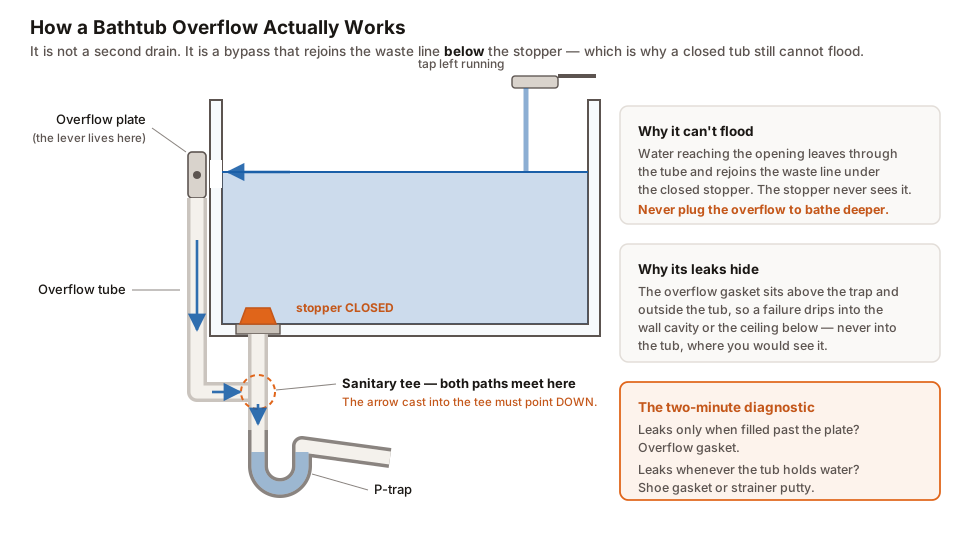
The overflow is the part of a bathtub that gets misunderstood in a specific and expensive way. People assume it helps the tub drain. It does not. It is a bypass, and understanding where it connects explains almost every mystery leak in a bathroom.
If you’re already fairly sure this is your leak — the stain below the bathroom only shows up after somebody takes a deep bath — the part you want is a few dollars. An overflow gasket is the single most common cause of that exact symptom. The two-minute test further down confirms it before you buy.
It Joins Below the Stopper
That is the whole design, and everything else follows from it.
Water reaching the opening on the tub wall goes into the overflow tube, runs down the outside of the tub, and enters the waste line at a sanitary tee — below the point where the stopper controls flow.
Which means: with the stopper firmly closed and the tap running, water still has a way out. It cannot reach the stopper, so the stopper cannot stop it. The tub fills to the overflow level and then holds there indefinitely.
This is why you can walk away from a filling tub and come back to a full tub rather than a flooded house. It is a piece of passive safety engineering with no moving parts, and it is required.
Why Its Leaks Are Invisible
Now look at where that connection physically sits: outside the tub shell, above the trap, inside the wall cavity or the joist bay.
When the gasket at that connection fails, the water does not go into the tub. There is nothing to catch it. It drips into the framing.
That is why the classic symptom is a stain on the ceiling below a bathroom, or a soft patch of subfloor, with a tub that appears completely fine. The tub is fine. The leak is on the outside of it.
The Two-Minute Diagnostic
There are three gaskets in the general area and they fail in ways you can tell apart without opening anything.
Fill the tub past the overflow plate. Leak appears. → Overflow gasket. The leak needs that water level to exist.
Any water in the tub causes it, even an inch. → Drain shoe gasket or the putty under the strainer flange. These are below the water line from the moment the tub holds anything.
Only leaks while the tub is draining, stops when empty. → Trap or the joints between the tee and the trap. Nothing is under pressure until water is moving through it.
Leaks even with the tub bone dry, after a shower. → Not the waste assembly at all. Look at the tile, the caulk line, or the valve behind the wall.
Getting this right before you cut an access panel is worth an hour of anyone’s time.
The Parts of the Overflow Assembly
Overflow plate. The visible cover. On a trip lever tub it carries the lever; on others it is plain or has a couple of screws.
Overflow gasket. A tapered rubber gasket between the overflow elbow and the outside of the tub wall. Beveled, and the bevel faces the tub so it can conform to the curve.
Overflow elbow / ell. The fitting behind the tub wall that the plate screws into and the tube leaves from.
Overflow tube. The vertical run from the elbow down to the tee. On brass kits it is 1½ inch tubing with compression joints; on PVC kits it is solvent-welded or slip-fit.
Sanitary tee. Where the overflow tube and the horizontal run from the drain shoe meet.
That tee has an arrow cast into it and the arrow must point down. Installed inverted, the tee’s internal baffle works against the flow instead of with it, and the assembly leaks no matter how good every gasket is. It is an easy mistake to make in a dark crawlspace and a miserable one to diagnose afterwards.
Replacing the Overflow Gasket
The gasket itself costs a few dollars. Getting to it is the job.
You need access from behind. An access panel in the closet or hallway behind the tub wall is the easy case. Without one, you are either cutting a panel — which is normal, expected work and far better than the alternatives — or coming up through the ceiling below on a second-floor tub.
Order of operations: plate off, linkage out if it is a trip lever or pop-up, then loosen the connection holding the elbow to the tub. On brass kits that is a compression nut on the tube; on many PVC kits it is a pair of screws that pull the elbow tight to the tub through the gasket.
The gasket goes bevel-toward-the-tub. This is the detail that decides whether the repair lasts. Backwards, it holds for a few weeks and then weeps, which is exactly the failure that makes people think the whole assembly is bad.
Do not use sealant to compensate. If the gasket needs silicone to hold, something is misaligned and the silicone will fail too — just later, and further into the wall.
If the assembly is old enough that one gasket has hardened, the others are the same age. Getting access is the expensive part of this job, not the parts — so while you’re in there, replacing the whole waste and overflow is usually less frustrating than cutting the same panel again in eighteen months for the next gasket.
The Overflow Cover Question
There is a product sold specifically to block the overflow so you can fill a tub deeper. It is worth being direct about this.
Blocking the overflow removes the only thing standing between a tub left running and water across the bathroom floor. That is the entire purpose of the part being blocked.
It also puts a standing head of water against the overflow gasket, plate screws and elbow — components designed to sit above the water line and only ever see splash. Sustained pressure on a gasket that was never rated for it is how a working overflow becomes a leaking one.
If you want a deeper bath, the real answer is a deeper tub, or a tub with the overflow set higher. Some soaking tubs are built exactly that way.
When the Overflow Is Also the Linkage
On trip lever and pop-up tubs, the overflow does double duty: the rod operating the stopper runs down through the same tube.
Two consequences worth knowing.
Adjusting the linkage can affect drainage. Lengthen the rod too far and the plunger sits low enough to partly obstruct the tee. The tub drains slowly and water may back up the overflow tube and appear around the plate.
Anything dropped down the overflow ends up in the tee. Which is a surprisingly common source of a tub that suddenly drains slowly with no other explanation.
Identifying which stopper type you have is covered in bathtub drain types, and the adjustment procedure is in the complete drain diagram.
Bottom Line
The overflow is a bypass that joins the waste line under the stopper. That single fact explains the safety function and every symptom.
If the leak needs a deep tub to appear, it is the overflow gasket. If any water in the tub causes it, look lower — the shoe gasket or the strainer putty. And if you replace the gasket, get the bevel facing the tub, because the one that goes in backwards comes back in a month.
Keep Reading
- Bathtub Drain Diagram: Every Part, Labeled and Explained — the full assembly, top to bottom
- Tub Drain Assembly Parts Explained — every component of a waste-and-overflow kit
- Bathtub P-Trap Diagram — what happens below the tee
- Bathtub Drain Types — which stopper you have, and what the linkage runs through
- Bath Waste and Trap Fittings — the four joint types in this assembly and the rule for each
Common Questions
What does the bathtub overflow drain do?
It is a safety bypass, not a second drain. When the water level reaches the opening on the tub wall, water goes in there and rejoins the waste line below the stopper — so a tub with the stopper closed and the tap running still cannot flood the bathroom.
Why is my ceiling stained below the bathroom but the tub isn't leaking?
A failed overflow gasket is the classic cause. The overflow connection sits outside the tub and above the trap, so when its gasket hardens the water drips straight into the wall cavity or onto the ceiling below, never into the tub where you would see it. The tell is that it only happens when someone fills the tub deep enough to reach the plate.
Can I block off the bathtub overflow to fill the tub deeper?
No. Covers sold for exactly this exist and they are a bad idea. Blocking the overflow removes the only thing preventing a tub left running from putting water across the bathroom floor and through the ceiling below, and in most cases it also traps water against a gasket that was never designed to hold a head of pressure.
How do I replace a bathtub overflow gasket?
Remove the overflow plate, lift out any linkage, then loosen the compression nut or the clamping screws holding the overflow elbow to the tub from behind. That last part requires access from the back of the tub — through a panel, from the room behind, or from the ceiling below on a second floor. The gasket then slides off the elbow.
Which way does a bathtub overflow gasket go?
Bevel toward the tub. The gasket is tapered so it can conform to the curve of the tub wall, and the wide flat side goes against the fitting. Installed backwards it will hold for a while and then weep, which is why the same leak often comes back a month after a repair.
Why does water come out around my overflow plate?
Either the tub is being filled past the overflow and the plate seal has failed, or on a trip lever tub the plunger is sitting so far down that the tee has partly blocked and water is backing up the overflow tube. The second one usually shows up right after someone adjusted the linkage.
Which way does the gasket face?
Bevel toward the tub, so it conforms to the curve of the wall.
Does every bathtub have to have an overflow?
Standard tubs, yes. A few soaking and freestanding designs handle it differently, with an integrated overflow at a higher level or a dedicated overflow fitting in the floor.